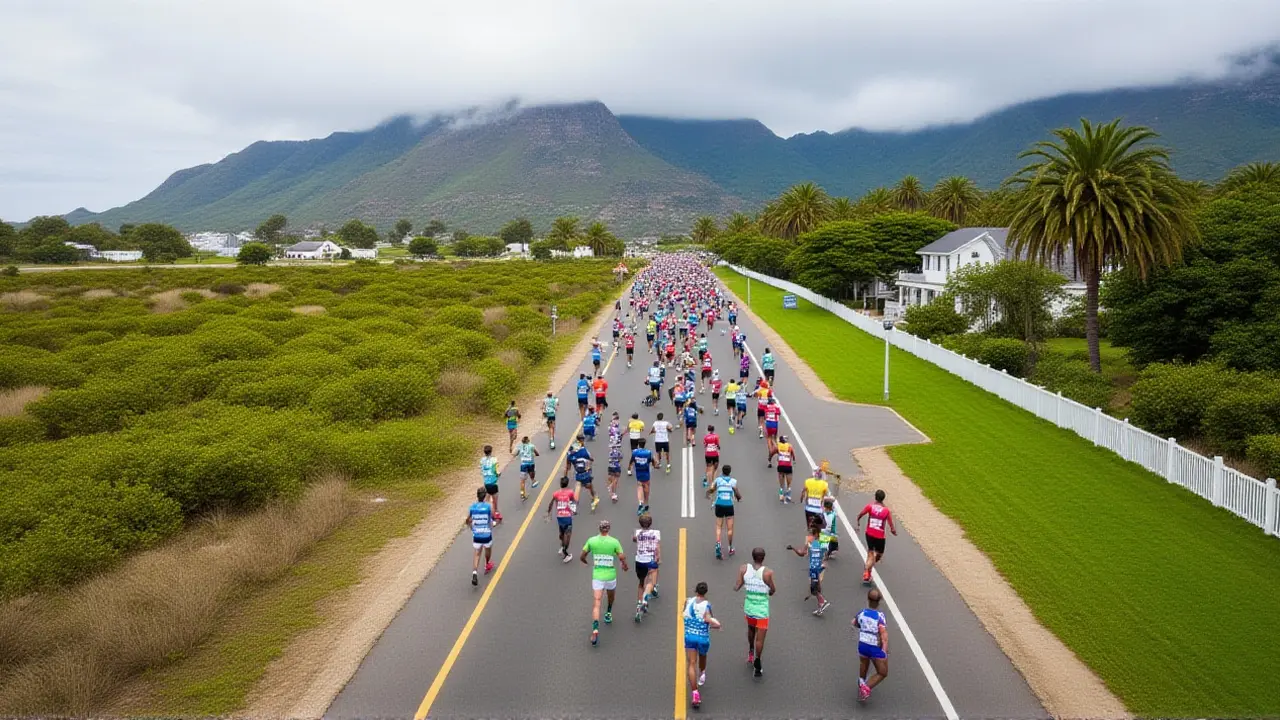
A shocking breach of sporting integrity has rocked the running community after two men managed to infiltrate the women's category of the Two Oceans MarathonCape Town, finishing in the top 10. Luke Jacobs and Nic Bradfield were disqualified after it was discovered they used race bibs registered to female participants to compete and place seventh and tenth, respectively. The deception, which fundamentally skewed the final standings, came to light not through official race sensors, but via a social media post and a dedicated running blog.
Here's the thing: bib swapping is a known taboo in the running world, but rarely does it reach the level of a top-10 finish in a prestigious women's field. The scandal was first flagged by Stuart Mann, a board member of the Two Oceans Marathon and author of the influential The Running Mann blog. It turns out Jacobs unwittingly provided the evidence for his own downfall by sharing photos on social media wearing a bib with the name "Larissa." Mann quickly connected the dots, identifying the bib as belonging to Larissa Parekh, a registered female participant.
How the Deception Happened
The logistics of the fraud were surprisingly simple but highly damaging. According to race communications, the two men exploited different loopholes. In one instance, a runner took the entry of a participant who had no intention of racing. In another, a male runner stepped in after a female entrant withdrew due to an injury. Because the event uses a highly coveted ballot system—making entries rare and valuable—the temptation to "gift" or swap a spot is high, despite strict rules against it.
Once Mann raised the alarm, officials dove into the timing chip data. The numbers didn't lie. The discrepancies between the registered gender of the bib holders and the actual performance patterns corroborated the social media evidence. The result was a swift cleanup of the leaderboard, though the damage to the women's top 10 had already been done.
Disciplinary Fallout and Systemic Failures
The hammer has fallen hard on everyone involved. It wasn't just the men who faced the music; all four individuals—the two male imposters and the two women whose numbers were used—have been disqualified. While the race leadership claims they aren't trying to be "draconian," the consequences for Jacobs and Bradfield are severe. They are currently facing a disciplinary process that will likely result in a two-year ban from the event.
But wait, the rabbit hole goes deeper. As officials scrubbed the data, they found that this wasn't just an isolated case of two pranksters or opportunists. The investigation revealed a wider culture of procedural disregard:
- Approximately 140 participants in the ultra marathon started ahead of their assigned positions.
- Roughly 250 people in the half marathon similarly ignored their starting placements.
These widespread violations suggest a systemic lack of discipline among a segment of the participants, leading officials to remove numerous entries where procedural issues were identified.
The Danger Beyond the Leaderboard
Why does this matter if a few people just wanted a medal? For the elite female athletes, it's a matter of respect and fairness. Mann noted that these women have "had enough of this nonsense," with many stepping in to help verify legitimate finishers. Beyond the trophy, there's the issue of qualification. Many runners use the Two Oceans results to qualify for other global competitions; fraudulent times can effectively steal a legitimate athlete's chance at a world-class event.
There's also a terrifying safety angle. Pieter-Henk Boer, a sports science researcher, pointed out that bibs aren't just numbers—they are linked to critical medical data. In the event of a cardiac arrest or a serious fall, paramedics rely on the bib to identify the runner and contact the correct next-of-kin. When a man runs under "Larissa's" name, that safety net vanishes.
Future of Race Integrity in Cape Town
The scandal has left the Two Oceans Marathon in a precarious position. Despite having timing chips, official substitution windows, and clear rules, the event was vulnerable to simple identity fraud. It proves that even the best technology can be bypassed by a bit of coordination and a social media post.
Moving forward, the race organizers are expected to tighten their verification processes. Whether that means stricter photo ID checks at the start line or more robust timing chip validation remains to be seen. For now, the focus is on restoring the integrity of the women's standings and ensuring that the podium belongs to those who actually earned it.
Frequently Asked Questions
What exactly is "bib swapping" and why is it banned?
Bib swapping occurs when a registered runner gives their race number to someone else to compete in their place without official authorization. It is banned because it invalidates race results, disrupts fair competition, and creates massive safety risks by associating the wrong medical and emergency contact information with a runner.
How were the male runners caught?
The deception was exposed when Luke Jacobs posted photos on social media wearing a bib registered to a woman named Larissa. Stuart Mann, a board member of the event, spotted the discrepancy and flagged it via his blog, which led officials to verify the timing chip data.
Will the men be allowed to run in future races?
Both Luke Jacobs and Nic Bradfield have been disqualified and are undergoing a disciplinary process. According to Stuart Mann, it is highly likely they will face a two-year ban from participating in the Two Oceans Marathon as a penalty for their actions.
Who else was affected by the disqualifications?
Beyond the two men, the two original female entrants whose bibs were used were also disqualified. Additionally, roughly 140 ultra marathoners and 250 half marathoners were removed from results due to starting in the wrong positions, indicating a wider problem with procedural violations.
How does this impact female athletes' rankings?
Because the men finished 7th and 10th, their removal shifts the standings upward for all female runners who finished behind them. This is critical because these rankings often serve as qualifiers for other prestigious international racing events.





Posts Comments
jagrut jain April 28, 2026 AT 08:36
Imagine being so desperate for a top 10 spot that you wear a bib named Larissa. Pure genius. 🙄
megha iyer April 29, 2026 AT 01:28
This is just sad. Real athletes don't need to cheat to get a medal. It's so tacky.
Angie Khupe April 29, 2026 AT 06:29
I hope everyone can just move past this and focus on the spirit of running again! 🌸✨
Pankaj Verma April 30, 2026 AT 01:33
The safety aspect here is the most critical part. In long-distance races, medical staff need instant access to the correct blood type and emergency contacts. If a runner collapses and the bib says they are a 30-year-old woman when they are actually a 45-year-old man, it can lead to catastrophic delays in treatment or incorrect medical administration during the golden hour of emergency care.
Mel Alm May 1, 2026 AT 10:05
Absolutey crazy that peeple think this is okay in a pro race. Just wrong.
priyanka rajapurkar May 2, 2026 AT 09:36
Oh sure, because posting the evidence of your fraud on social media is definitely the hallmark of a master criminal. Truly impressive work by these guys. 👏
Pradeep Maurya May 3, 2026 AT 18:20
It is absolutely imperative that we recognize how this behavior undermines the very essence of sporting integrity which is the foundation of our global athletic culture, and while the Two Oceans Marathon is a prestigious event in South Africa, the ripples of this deception are felt by every honest athlete in India and across the world who spends years honing their craft only to have their achievements diluted by those who seek shortcuts through deceitful means, especially when the gender categories are specifically designed to ensure fair play and equitable competition among peers of similar physiological capabilities, making this act not just a rule-break but a profound insult to the female runners who have dedicated their lives to the sport.
Santosh Sharma May 3, 2026 AT 18:42
get the ban and move on no excuse for this
Sathyavathi S May 4, 2026 AT 00:25
Omg can we talk about how the women who gave their bibs away are just as guilty?! Like, who just hands over their spot to a man? I bet there's so much more drama behind the scenes that the blog isn't even mentioning. It's a total mess and honestly, the fact that 400 other people were starting in the wrong spots just shows that this entire race was a complete joke of an organization! I can't believe people actually pay for this experience just to have it be this chaotic. It's practically a comedy of errors at this point and I am here for the fallout. Absolutely scandalous behavior from start to finish!
Paul Smith May 4, 2026 AT 10:36
While it is truly disheartening to see such a lack of discipline, let us use this as a learnin moment to encourage everyone to embrace the true joy of the journey rather than just the destination of the finish line, because when we focus too much on the prestige of the ranking, we lose the communal spirit that makes runing so special across differents cultures, and I believe that if we all support each other in a way that is honest and inclusive, we can turn this negative situation into a positive drive for better integrity in all our local races around the world, keeping the passion alive while respecting the boundaries that make the sport fair for everyone involved regardless of their level!
ANISHA SRINIVAS May 5, 2026 AT 04:36
Totally agree with the safety points! 🏃♀️ If anyone is looking for ways to avoid this, always make sure to register through official channels and never share your bib! It's so important to protect the integrity of the sport we love! Keep pushing forward everyone! 💪✨
Write a comment