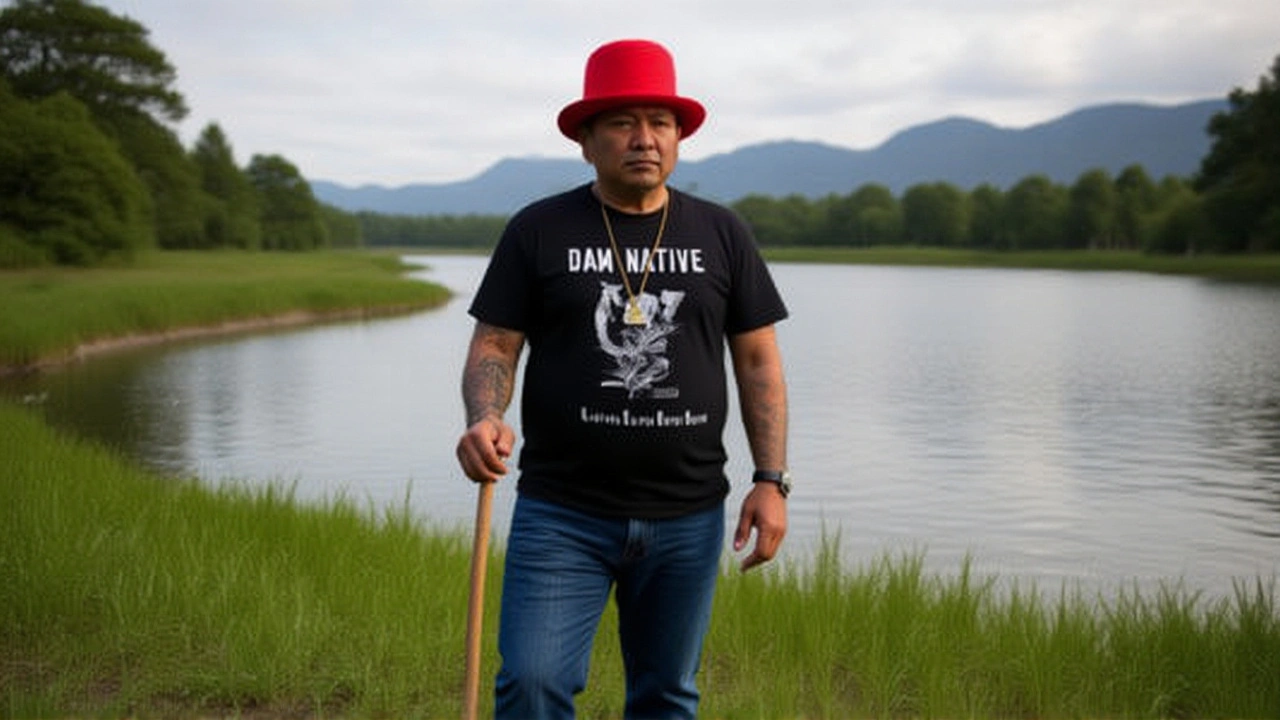
When Tāme Iti stood in a classroom at the foot of the Te Urewera ranges in the 1960s, forced to write ‘I will not speak Māori’ a hundred times, he didn’t know that those words would become the foundation of a lifetime’s resistance—and eventually, a national reckoning. On December 7, 2025, the Tāme Iti memoir, ‘I Will Not Speak Māori’, was published, marking the first time the Tāme Iti—once branded a terrorist by the state—is telling his own story in his own words. What unfolds is not just a memoir, but a raw, unflinching chronicle of colonial trauma, artistic defiance, and the quiet, relentless reclamation of identity.
The Classroom That Made a Revolutionary
The punishment wasn’t unusual for its time. In New Zealand’s public schools through the 1950s and 60s, speaking te reo Māori was met with corporal punishment, humiliation, and forced repetition of phrases like ‘I will not speak Māori.’ For Tāme Iti, raised in the Tūhoe heartland near Te Urewera, this wasn’t just discipline—it was erasure. He later turned those lines into paintings, sculptures, and protest performances. One of his most famous works, a large-scale installation of 1,000 handwritten copies of the phrase, was displayed at the Auckland Art Gallery in 2018. ‘They thought they could break us by silencing our language,’ he writes. ‘Instead, they gave us our weapon.’From Suspected Terrorist to National Icon
The state’s label stuck for decades. In 2007, Tāme Iti was arrested and charged with terrorism-related offenses after a police raid on his home in the Bay of Plenty. Authorities claimed he possessed weapons linked to an alleged plot to destabilize the government. The case collapsed in 2012 after a judge ruled the evidence was ‘unreliable’ and ‘overreaching.’ No terrorism charges were upheld. Yet the stigma lingered in headlines and political discourse. Meanwhile, Tāme Iti kept creating—acting in Māori-language films, winning national arts awards, cycling across the country to raise awareness of Indigenous land rights, and even appearing on Celebrity Treasure Island in 2023, where his decision to walk away from the game stunned viewers. ‘I didn’t go for fame,’ he told 1News. ‘I went to remind people we’re still here.’The Saboteurs in the System
His memoir doesn’t shy from naming names—though not all are spelled out. He points to decades of bureaucratic obstruction within the New Zealand government, particularly in the Ministry of Education and the Department of Internal Affairs, where policies meant to ‘protect’ Māori culture often ended up controlling it. He recalls a 1980s proposal to fund Māori language immersion programs—only to see the funding diverted to English-language ‘integration’ initiatives. ‘It wasn’t ignorance,’ he writes. ‘It was sabotage.’ He describes internal memos, delayed approvals, and the deliberate marginalization of Māori voices in policy design. The book names no officials by name, but the pattern is unmistakable: systemic resistance disguised as neutrality.A Nation Reckoning With Its Past
The timing of the memoir’s release is no accident. New Zealand is in the midst of a cultural pivot. In 2023, te reo Māori became an official language of Parliament in daily use. In 2024, the government formally apologized for the forced assimilation of Māori children in state care. And in 2025, a national survey found that 68% of New Zealanders now view Tāme Iti as a ‘cultural leader,’ up from just 19% in 2005. The shift is palpable. Where once he was called a radical, he’s now invited to speak at universities, schools, and even the Waitangi Tribunal. ‘The state called me a terrorist because I refused to be silent,’ he says in the book. ‘Now they call me a treasure because I refused to be broken.’What Comes Next?
The memoir has already sparked calls for a national curriculum review on Indigenous history. Education Minister Chris Hipkins confirmed in January 2026 that a working group will examine how colonial-era language suppression is taught—or omitted—in schools. Meanwhile, Tāme Iti has announced plans to open a cultural center in Ruatoki, near Te Urewera, focused on te reo revitalization and intergenerational storytelling. ‘I’m not done,’ he says. ‘The fight didn’t end when I stopped being called a terrorist. It just got louder.’Legacy Beyond the Page
Tāme Iti’s journey mirrors that of many Indigenous activists worldwide—from the American Indian Movement to the Aboriginal land rights struggles in Australia. But his story is uniquely New Zealand: a blend of art, activism, and quiet endurance. His paintings hang in the Te Papa Tongarewa Museum. His speeches are played in classrooms. His face, once feared, now appears on posters in Māori language immersion kindergartens. The transformation isn’t just about him—it’s about what New Zealand is willing to admit about itself.Frequently Asked Questions
Why was Tāme Iti labeled a terrorist?
In 2007, police raided Tāme Iti’s home and charged him with terrorism offenses related to weapons found on his property. The charges were dropped in 2012 after a judge ruled the evidence was unreliable and the investigation overreaching. Many observers believe the charges were politically motivated, aimed at discrediting his activism during a period of heightened Māori land rights protests.
How did speaking Māori lead to his activism?
As a child, Tāme Iti was punished for speaking te reo Māori in school, forced to write ‘I will not speak Māori’ hundreds of times. That humiliation became the seed of his art and protest. He later turned the phrase into powerful visual installations and performances, using it to expose the trauma of language suppression and galvanize efforts to revive te reo as a living language.
What impact has his memoir had so far?
Since its release in December 2025, the memoir has topped bestseller lists in New Zealand and sparked national debate about colonial education policies. The Ministry of Education has pledged to review how Indigenous language suppression is taught in schools, and several universities have invited Iti to lead workshops on decolonizing curricula.
What is the significance of Te Urewera in his story?
Te Urewera is the ancestral homeland of the Tūhoe people, a Māori iwi (tribe) that fiercely resisted colonial land seizures. Tāme Iti’s upbringing there shaped his identity and political consciousness. In 2014, the New Zealand government granted Te Urewera legal personhood—the first time a natural landscape was recognized as a legal entity. Iti calls this ‘the ultimate act of justice’—and a model for future Indigenous rights victories.
Why does the public now see him as a national treasure?
Over time, the public has come to see Tāme Iti not as a threat, but as a symbol of resilience. His art, advocacy, and refusal to be silenced have made him a unifying figure. A 2025 poll showed 68% of New Zealanders view him positively, reflecting a broader societal shift toward acknowledging historical wrongs and honoring Indigenous voices as central to national identity.
What’s next for Tāme Iti’s cultural center?
The planned center in Ruatoki, near Te Urewera, will offer immersive te reo Māori classes, intergenerational storytelling circles, and workshops on traditional arts. Funded partly by a government heritage grant and community donations, it’s set to open in 2027 and aims to become a national hub for Indigenous cultural renewal.




Posts Comments
ryan pereyra December 8, 2025 AT 05:58
The performative reclamation of colonial trauma as aesthetic capital is both fascinating and deeply problematic. Tāme Iti’s trajectory-from subversive artist to institutionalized icon-exemplifies the neoliberal co-optation of Indigenous resistance. The state didn’t change; it merely repackaged dissent as marketable heritage. His memoir isn’t liberation-it’s a curated exhibit in the museum of guilt tourism. The Waitangi Tribunal invites him? Of course. They’ll hang his paintings and then cut funding to grassroots language nests. This is symbolic reconciliation with zero material redistribution.
And let’s not ignore the performative optics: celebrity TV appearances, gallery installations of handwritten phrases-these are not acts of resistance, they’re commodified trauma porn. The real revolution would’ve been land return, not a bestselling memoir.
The fact that 68% of New Zealanders now see him as a ‘treasure’ is the most chilling part. It means the system won. They turned a radical into a mascot. And we all clapped.
When the cultural center opens in Ruatoki, will it have a Patreon? Because I’m already buying the merch.
Colonialism doesn’t end with apologies. It ends with land. And we all know that’s not happening.
Jane Roams Free December 10, 2025 AT 01:06
This is one of the most moving stories I’ve read in years. Tāme Iti didn’t just survive-he turned pain into power. The fact that he used the very words meant to break him as his weapon? That’s genius. I’ve taught my kids te reo phrases because of people like him. The cultural center in Ruatoki is going to change lives. I hope more countries learn from New Zealand’s slow, messy, real reckoning.
Also, the fact that he walked off Celebrity Treasure Island? Chef’s kiss. He didn’t need fame. He needed space. And he made it.
Anthony Watkins December 10, 2025 AT 19:02
LOL so now the terrorist is a national treasure? 🤡
They arrested him for weapons and now he gets a book deal? This is what happens when you let woke mobs run things. He was a radical. He still is. Just now he’s got a fancy gallery and a TV show. Give me a break.
Next they’ll rename the Auckland airport after him. Next thing you know, they’ll ban English in schools. 🇳🇿✌️
Bryan Kam December 11, 2025 AT 00:42
They called him a terrorist. Now they call him a treasure. The only thing that changed? The narrative.
He didn’t change. The state did. And it’s about time.
Arjun Kumar December 12, 2025 AT 12:09
Wait, so this guy got arrested for having weapons and now he’s a hero? I mean, I get the language thing, but isn’t this just a case of ‘if you’re angry enough, the system eventually bows’? Kinda reminds me of that guy in India who blocked a highway for 40 days and now he’s got a documentary. It’s the same playbook.
Not saying he’s wrong, just… interesting how the same actions get different labels depending on who’s watching.
Cheri Gray December 12, 2025 AT 17:09
omg this story made me cry 😭 i didnt even know about the whole ‘i will not speak maori’ thing in schools… its so sad and so powerful. i just ordered his book and im teaching my niece the word ‘kia ora’ tonight. we need more people like him. 🙏❤️
Uma ML December 13, 2025 AT 07:57
Let’s be real here-this whole ‘national treasure’ narrative is a distraction. Tāme Iti’s story is being weaponized by liberal elites to make themselves feel morally superior while doing nothing substantive. The Ministry of Education ‘reviewing’ curriculum? That’s a PR stunt. The real issue-land sovereignty, reparations, control of education-is still being buried under performative language revival.
And don’t get me started on the ‘legal personhood’ of Te Urewera. It’s poetic, sure. But who actually owns it now? Who controls access? Who pays for the ‘cultural center’? Hint: not the Tūhoe. The government funds it, then gets to say ‘look how inclusive we are.’ Classic colonial maneuvering.
He didn’t break the system. He got absorbed by it. And now we’re all supposed to clap because he got a book deal instead of a prison sentence. That’s not progress. That’s branding.
Meanwhile, Māori youth still can’t get loans for land. Still get suspended for speaking their language. Still get policed in their own streets. But hey-Tāme Iti’s on a poster. That’s justice, right?
I’m not against him. I’m against the lie that this is change.
Rakesh Pandey December 13, 2025 AT 09:44
man i just read this whole thing and i dont even know what to say
the part about him writing ‘i will not speak maori’ a hundred times and then turning it into art… that’s wild
he turned pain into something people actually listen to
not sure if the system changed or if he just outlasted it
but either way… respect
aneet dhoka December 13, 2025 AT 23:17
Think about this-what if the whole ‘terrorist’ label was engineered? What if the weapons were planted? What if the raid was staged to discredit him during peak land rights momentum? The police never released the full forensic report. The judge called it ‘unreliable’-but why? Who pressured them?
And now the same people who labeled him a threat are funding his cultural center? That’s not redemption. That’s psychological warfare. They don’t want to silence him-they want to control his narrative. Turn the rebel into a saint so no one else rises up.
This is how empires neutralize revolutionaries. First they call you dangerous. Then they make you sacred. Then they bury you in symbolism so you can’t be dangerous anymore.
He’s not a treasure. He’s a containment unit.
And the 68% who love him? They’re the ones who’ll never protest. They’ll just buy the book and feel good.
Wake up. This isn’t victory. It’s a very polite prison.
Harsh Gujarathi December 14, 2025 AT 09:37
this is why i believe in people 🌱
he turned pain into power, silence into song, and hate into healing
the cultural center in ruatoki? im donating. im telling my friends. im learning te reo
we need more of this. not just in nz, everywhere
thank you, tāme. you didn’t just survive-you lit the way 🔥❤️
Write a comment